Bass · Beginner technique
How to Fish a Wacky Rig for Bass (Simple Beginner Setup)
If you are bored waiting for rain or river conditions to improve, bass fishing with a wacky rig is one of the easiest ways to put fish on the line. It works from shore, from ponds and lakes, and along slow edges on rivers where bass stack in slack water.
The whole idea is simple: hook a soft stick worm through the middle, let both ends flutter down, and wait for a bass to eat on the fall. No crankbait cadence to memorize, no special boat—just a rod, light line, and a worm.
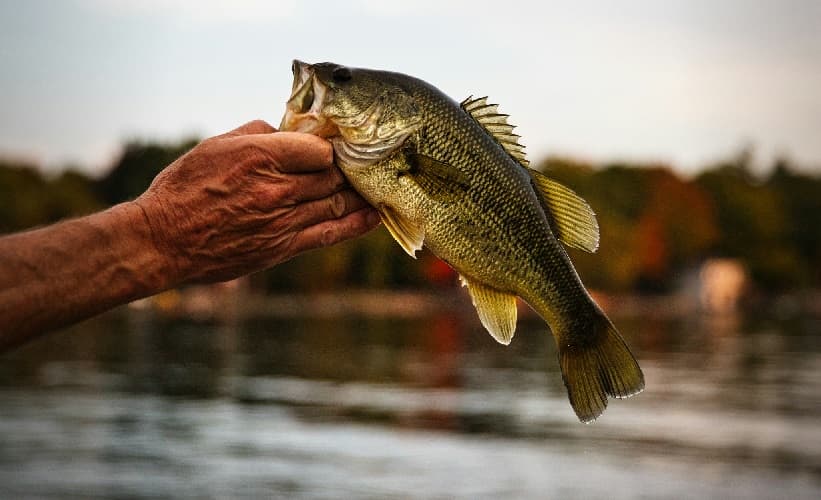
Waiting on better river conditions? Check river flows before you leave—and keep this wacky rig handy for ponds and lakes in the meantime.
Gear you need
You do not need a boat or a deck full of tackle. A simple wacky rig for bass is one rod, light line, a stick worm, and a hook. Here is the short list:
- 5-inch stick worm / Senko-style worm
- 1/0 wacky hook or finesse hook
- Spinning rod setup (roughly 6'6"–7' medium light works well)
- 8–12 lb mono or fluorocarbon
- Optional: O-rings to save worms
- Optional: weighted wacky hook for wind or slightly deeper water
Browse more tackle on the recommended gear hub and reels page.
5-inch stick worm (Senko-style)
The heart of the rig. A soft stick worm wiggles on both ends when you hook it through the middle—no fancy action required.
1/0 wacky / finesse hook
Wide-gap hooks built for piercing soft plastic through the center without tearing the worm apart on every cast.
Pflueger President Spinning Reel (3000)
A dependable spinning reel that pairs well with light line and finesse presentations—same family of gear many TroutHunter readers already use for trout.
Sunline Super FC Sniper Fluorocarbon (8–10 lb)
Low visibility for clear ponds and lakes. Mono works too if that is what you have; keep it in the 8–12 lb range for a 5-inch worm.
Optional add-ons
Wacky rig O-rings
Slide an O-ring onto the worm, then hook through the ring so you burn through fewer baits.
Weighted wacky hook
Adds a little sink rate when wind or depth calls for it. Optional—learn weightless first.
How to rig a wacky worm
Hook a soft stick worm through the middle so both ends hang even and flutter on the fall. The steps below walk you through the rig; the diagram shows how the finished setup looks on the line.
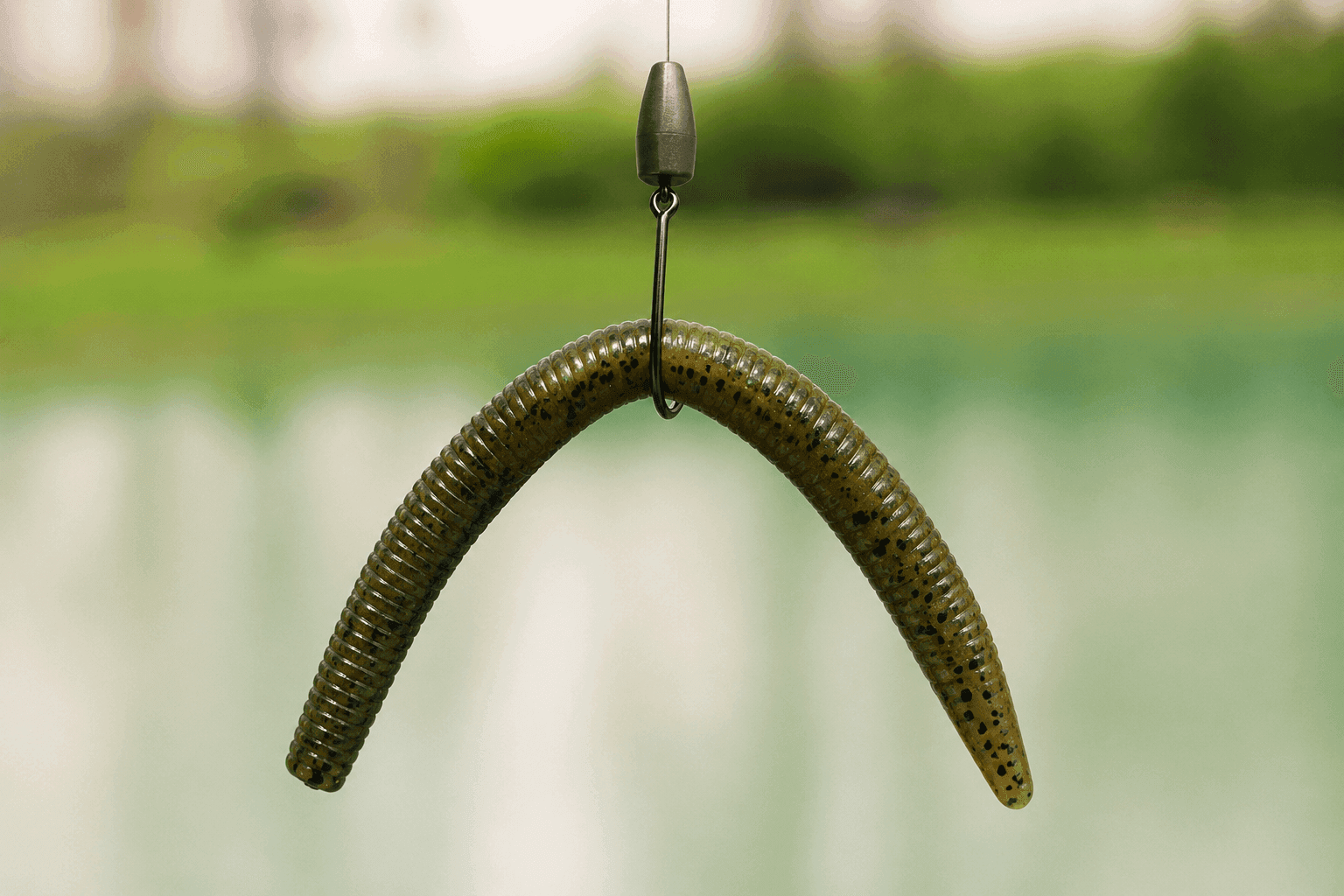
- Find the middle of the worm.Fold it gently or pinch both ends together so the hook goes through the center—not closer to one end.
- Push the hook straight through the center.Enter from the side, exit the other side. The worm should sit balanced on the hook shank.
- Let both ends hang evenly.That even fall is what makes bass eat. An off-center hook makes one end dive faster and looks wrong.
- Optional: use an O-ring.Slide a wacky O-ring to the middle, then hook through the ring. Worms last longer, especially on rocky banks.
Skip the bullet weight here. A bullet weight in front of the worm is the Texas rig—not the wacky rig. For a true wacky rig, start with no weight and learn the flutter first.
How to fish it
Cast near docks, weed edges, laydowns, pond banks, and slack water on slow rivers. You are not power-fishing a crankbait—you are placing the worm where a bass might already be looking up.
After the cast, let the worm sink on semi-slack line. Keep a little contact without dragging it. Watch the line for jumps, ticks, or sideways movement—that is often the bite before you feel anything.
Give small twitches with the rod tip, then let it fall again. Most bites happen on the fall, so resist the urge to reel constantly. When the line does something odd, reel down until you feel weight and set with a firm sweep—not a trout-sized rip.
Best places to throw it
Bass on a wacky rig are usually shallow and looking up. Target anything that creates an ambush edge:
Ponds
Walk the bank and fan casts to visible cover—perfect for learning line watching.
Docks
Cast alongside pilings; let the worm fall on the shady side.
Weed edges
Parallel the weed line so the worm ticks the open side without snagging constantly.
Laydowns
Hit the ends of fallen trees first, then work the trunk shadow.
Shallow flats
Slow presentations shine when bass cruise in a foot or two of water.
Slow river pockets
Eddies and slack water behind rocks—same idea as trout eddies, different species.
Anywhere bass are cruising shallow, a weightless wacky worm is fair game—from shore, a dock, or a small boat.
Common mistakes
- Fishing it too fast. Most of the magic is on the fall, not constant reeling.
- Using too much weight. Weight kills the flutter. Start weightless.
- Not watching the line. Bites often show as a tick or sideways swim before you feel weight.
- Hooking the worm off-center. Re-rig if one end falls faster than the other.
- Setting the hook too aggressively. A firm sweep is enough—soft worms tear free if you overdo it.
Beginner wacky rig setup
- 5-inch stick worm
- 1/0 wacky hook
- Spinning rod (medium light)
- 8–10 lb line
- No weight to start
Tie it on, make ten casts to one dock or weed edge, and watch the line more than the worm. That alone will teach you more than swapping colors every five minutes.
Watch the Full Wacky Rig Setup
Here's the full setup shown step-by-step on the water.
FAQ
What size hook is best for a wacky rig?
A 1/0 wacky or finesse hook is a solid starting point for a 5-inch stick worm. Go slightly smaller if you are downsizing worms; go up one size if you are missing short strikes and the worm profile still looks natural.
Do you use a weight with a wacky rig?
Not when you are learning. A weightless wacky rig lets the worm flutter on the fall, which is when most bites happen. Optional weighted wacky hooks can help in wind or deeper water, but skip them until you are comfortable watching your line.
What size worm is best for a wacky rig?
A 5-inch Senko-style stick worm is the classic choice: enough profile for bass to notice, easy to cast on light spinning gear, and simple to hook through the middle.
Can you fish a wacky rig from shore?
Yes. Pond banks, docks, weed edges, and slow river pockets are perfect from shore. Cast parallel to the bank when you can so the worm stays in shallow water longer.
What color worm should I use for bass?
Start with green pumpkin or watermelon in clear water, black or blue flake in low light or stained water, and white or chartreuse when you want contrast on cloudy days. If bass are short-striking, try a darker tail or a worm with a little flake.